CFR Chemicals Inc. is pleased to announce that we have enhanced our service to existing and future customers in North Eastern Alberta. CFR Chemicals Inc. has entered into a partnership agreement with Xtreme Oilfield Technology Ltd. in Conklin, AB. to provide bulk and packaged chemical products for regional Oilfield, Industrial and Manufacturing needs. Both companies believe in strong working relationships, financial prudence and supporting the communities where we work and live. CFR Chemicals Inc’s reputation for exceptional service, responsiveness and infrastructure coupled with Xtreme Oilfield Ltd.’s strategic locations, local business network and professional reputation will provide chemicals and service critical to the success of regional businesses.
CFR Chemicals Inc. is a privately owned, Canadian company based in Calgary, AB providing sales/distribution throughout Alberta, NE British Columbia and Saskatchewan as well as custom blending, chemical storage, rentals and transloading services in the Red Deer County region of central Alberta.
For more information, please contact CFR Chemicals at https://cfrchemicals.com/contact/ and Xtreme Oilfield at https://xtremeoilfield.ca/contact-us/
CFR Chemicals Inc. is pleased to announce that it has entered into a partnership agreement with UUJO Developments LP (a Doig River First Nation Company). In order to increase our service to customers in Northeastern British Columbia, our partnership will begin working on opportunities immediately. CFR Chemicals Inc.’s reputation for exceptional service, responsiveness, and chemical infrastructure coupled with UUJO Developments LP’s local relationships and reputation will enable us to enhance service and coverage for both partners.
We believe in strong teamwork, financial prudence, building good industry relations and we are committed to supporting and growing First Nation businesses. CFR Chemicals Inc. is a privately owned, Canadian company based in Calgary, AB providing sales/distribution throughout Alberta, NE British Columbia, and Saskatchewan as well as custom blending, chemical storage, rentals, and transloading services in the Red Deer County region of central Alberta.
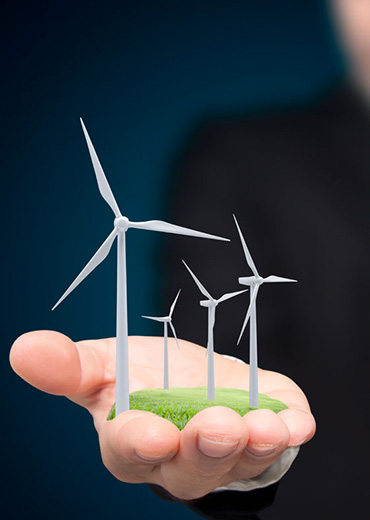
For consumers wanting to generate their own green power, installing a small wind turbine may be an option. Small wind turbines are electric generators that use the energy of the wind to produce clean, emissions-free power for individual homes, farms, and small businesses.
It must be remembered, though, that wind power is intermittent and variable, so a wind turbine produces power at or above its annual average rate only 40% of the time. That is, most of the time.
Figures & Captions
A wind turbine may be “available” for 90% or more of the time, but its output depends only on the wind. Without the wind, it is like a bicycle that nobody rides: available, but not spinning.
A beautiful flower vase.
Wind power has a very low “capacity credit,” its ability to replace other sources of power.
For example, in the U.K., which boasts of being the windiest country in Europe, the Royal Academy of Engineering projects that 25,000 MW of wind power will reduce the need for conventional power capacity by 4,000 MW, a 16% capacity credit.
What is wind power’s capacity credit?
Two studies in Germany projected that 48,000 MW of wind power will allow reducing conventional capacity by only 2,000 MW, a 4% capacity credit (as described in “Wind Report 2005,” Eon Netz).
Similarly, the Irish Grid calculated that 3,500 MW of wind power could replace 496 MW of conventional power, a 14% capacity credit. See some of these and other documents here at National Wind Watch.
Figures & Captions
Photo booth anim 8-bit hella, PBR 3 wolf moon beard Helvetica. Salvia esse nihil, flexitarian Truffaut synth.
Stumptown bespoke, biodiesel minim beard High Life incididunt retro sustainable 90′s Echo Park Tumblr.
Sed ut perspiciatis unde omnis iste natus error sit voluptatem accusantium.hoto booth anim 8-bit hella, PBR 3 wolf moon beard Helvetica. Salvia esse nihil, flexitarian Truffaut synth.
A beautiful flower vase.
Wind power has a very low “capacity credit,”
its ability to replace other sources of power.
For example, in the U.K., which boasts of being the windiest country in Europe, the Royal Academy of Engineering projects that 25,000 MW of wind power will reduce the need for conventional power capacity by 4,000 MW, a 16% capacity credit.
What is wind power’s capacity credit?
Two studies in Germany projected that 48,000 MW of wind power will allow reducing conventional capacity by only 2,000 MW, a 4% capacity credit (as described in “Wind Report 2005,” Eon Netz).
Similarly, the Irish Grid calculated that 3,500 MW of wind power could replace 496 MW of conventional power, a 14% capacity credit. See some of these and other documents here at National Wind Watch.
Heading 1
According to Eon Netz, one of the four grid managers in Germany, with 7,050 MW of wind power capacity installed in its area at the end of 2004, the amount of back-up required was over 80%.
Heading 2
Which was the maximum output observed from all of their wind power facilities together.
Heading 3
That is, for every 10 MW of wind power added to the system in this case, at least 8 MW of back-up power must also be dedicated.
Heading 4
Two studies in Germany projected that 48,000 MW of wind power will allow reducing conventional capacity by only 2,000 MW
Heading 5
According to Eon Netz, one of the four grid managers in Germany, with 7,050 MW of wind power capacity installed in its area at the end of 2004
Heading 6
According to Eon Netz, one of the four grid managers in Germany, with 7,050 MW of wind power.
Nomal List
According to Eon Netz, one of the four grid managers in Germany, with 7,050 MW of wind power capacity installed in its area at the end of 2004
Aliquam erat volutpat
Exercitation photo booth stumptown tote bag Banksy
Tempor duis single-origin coffee
Magnis dis parturient montes
Numbered List
According to Eon Netz, one of the four grid managers in Germany, with 7,050 MW of wind power capacity installed in its area at the end of 2004
Aliquam erat volutpat
Exercitation photo booth stumptown tote bag Banksy
Tempor duis single-origin coffee
Magnis dis parturient montes
Doesn’t a unit of electricity produced by wind turbines reduce a unit from
another source?
If there is hydropower on the system, that is the most likely source to be reduced, because it can be switched on and off the most readily. Some natural gas plants can also switch on and off quickly (though at a cost of efficiency, i.e., burning more fuel). Otherwise, the output from fuel-burning plants is ramped down or it is switched from generation to standby. In either case, it still burns fuel.